



eighteenth-century astronomical equipment reflecting telescope
The main component of a reflecting telescope is a concave mirror (primary mirror), which reflects light to the focal point. Unlike refracting telescopes, reflecting telescopes use mirrors instead of lenses to focus light, which avoids chromatic aberration problems. Common reflecting telescope designs include the Newtonian and Cassegrain telescopes. Reflecting telescope design was further developed in the 18th century, particularly with large aperture and high power reflecting telescopes. The use of a parabolic mirror allows the light rays parallel to the optical axis of the objective lens to be accurately focused on the focal point, thereby greatly improving the image quality.
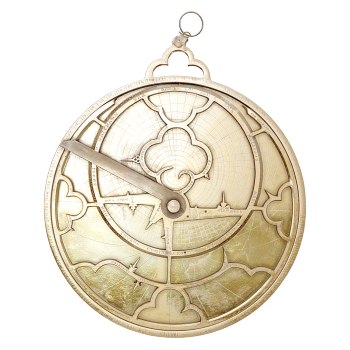
Medieval flat star chart
The star chart is an ancient astronomical instrument, which can be said to be a handheld model of the universe. Its various functions also make it a sophisticated inclinometer and an analog computing device capable of solving several problems in astronomy. In its simplest form, it is a metal disk with patterns of wires, cuts, and perforations, allowing users to accurately calculate the position of celestial bodies. Astronomers throughout history have used it to measure the height of celestial bodies on the horizon, both during the day and at night; It can be used to identify stars or planets, determine the local latitude at a given local time, measure or conduct triangulation.
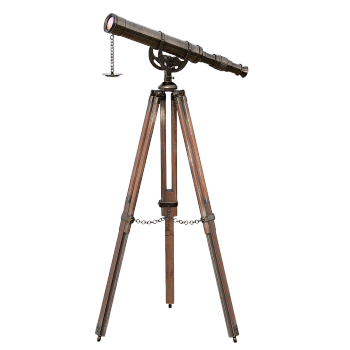
Old style copper astronomical telescope

binoculars

Popular Models


Honey Badger (3D animated model)
192 View

Guinea fowl (3D animated model)
163 View
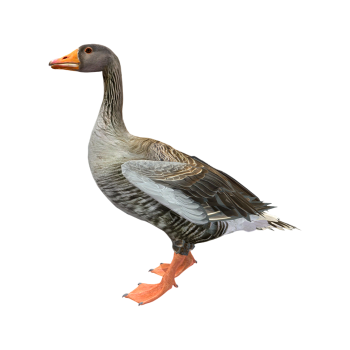
Wild Goose (3D animated model)
185 View

Red Fox (3D animated model)
153 View
Random Model


Short spined crab
781 View



Wuhan shadowless tower
788 View

Sin ramen
521 View

Lamborghini Aventador SV supercar
1666 View

Buergeria oxycephala
627 View

Black Fit Jeans
798 View

Half body portrait of Friedrich Schiller
1270 View